By someone who has stood at a noisy conveyor at 2 a.m., watching an expiry date refuse to print.
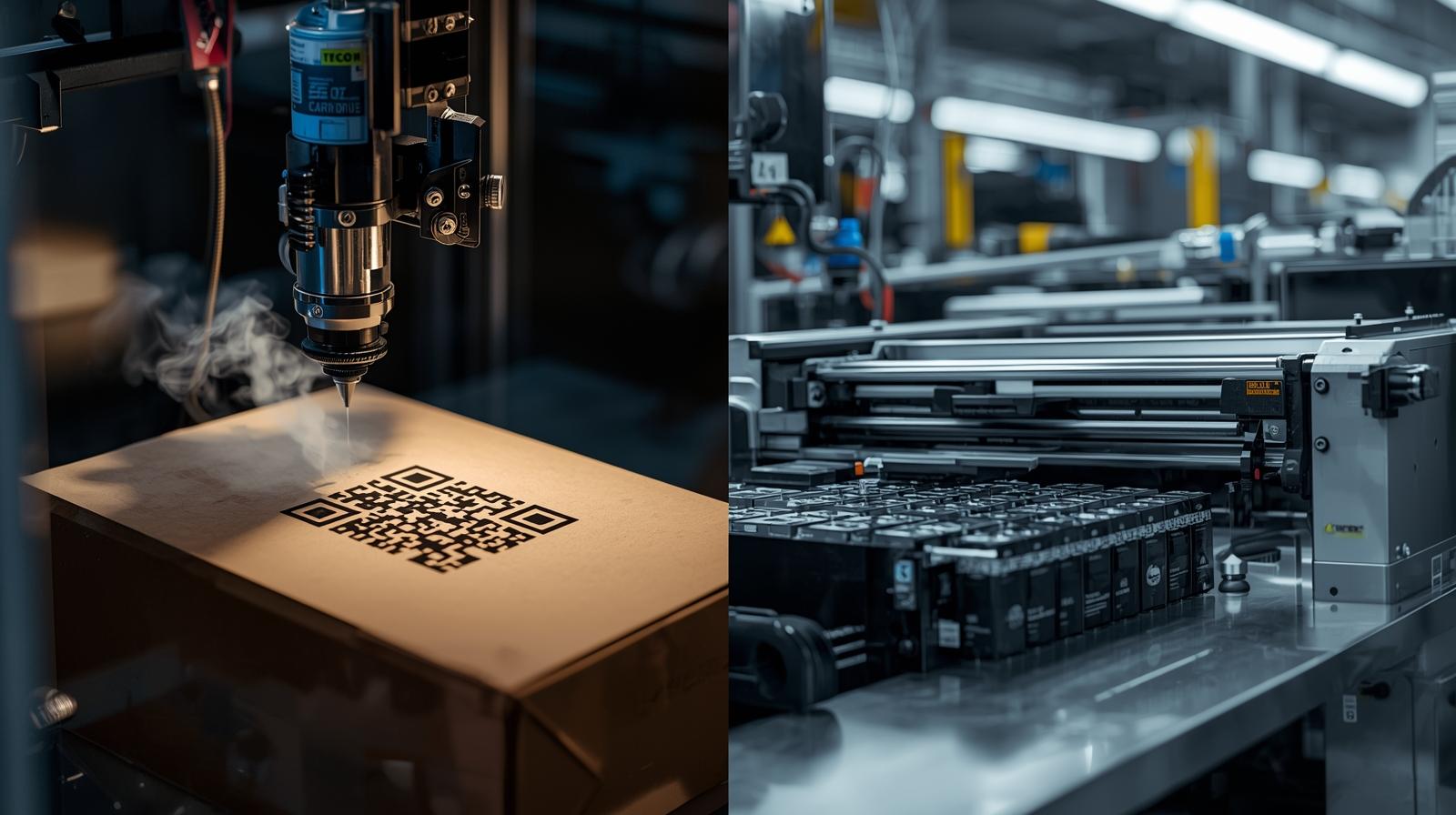
Maya runs operations at a mid‑size beverage plant in Ohio. On Tuesday, her filler was perfect, her caps were spotless—and the date code still smeared on cold PET. Luis, her maintenance lead, did the usual ritual: wipe, purge, re‑prime, nudge the throw distance, check the makeup level. They got it back. Tomorrow they’ll do it again.
Two coding technologies promise to end that loop in different ways:
Solvent inkjet (CIJ/TIJ/PIJ) throws micro‑drops that evaporate fast and stick to almost anything.
Laser (CO₂, fiber, UV) writes with light—no ink, no cartridges—by changing the surface (ablation, foaming, annealing).
Both can meet spec. The question is: Which one gets you the lowest lifetime footprint and the fewest late‑night surprises?
We’ll use five lenses that matter in real plants:
Mark quality & compliance
Carbon footprint
Air emissions & worker experience
Operational risk (downtime, error‑proofing)
Total cost of ownership (TCO)
We’ll also include a simple, auditable calculator you can hand to finance.
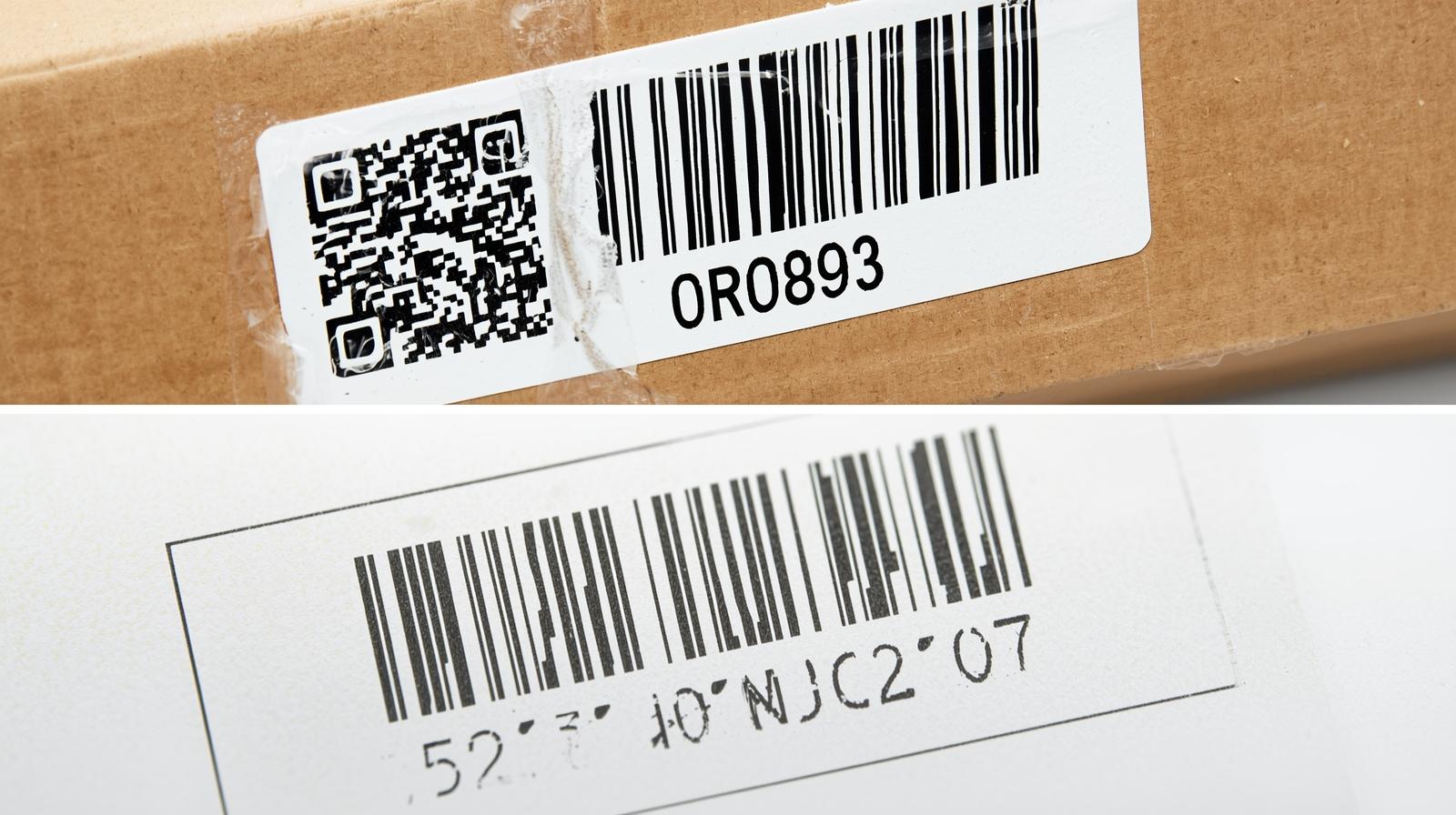
Laser marks are permanent. On cartons, many closures, glass, and some plastics, lasers produce crisp human‑readable text and robust 2D codes that sail through verification. Where lasers struggle is very wet/cold surfaces, very dark additive‑rich plastics, and highly reflective foils without the right wavelength.
Solvent inkjet is the Swiss Army knife. With the right ink, it codes wet glass, oily cans, and chilly PET. But permanence depends on ink/surface chemistry and dry time; human‑facing scuff can still happen.
Reality check: If your future includes 2D/QR for traceability and digital experiences, laser’s permanence is a strategic asset. If your reality is condensation and constant SKU/substrate shifts, solvent inkjet often wins on versatility.
Laser has two main footprint sources: electricity for the laser controller and fume extraction. There are no cartridges to manufacture, ship, store, and dispose of.
Solvent inkjet uses surprisingly little electricity—but its footprint rides on consumables (ink/makeup/filters/wipes), their transport, and end‑of‑life handling. Most standard solvent systems emit VOCs by design, which also affects indoor air quality.
What usually tips the scales: At scale, the consumables you don’t buy with laser—over years—dominate the lifecycle difference more than the laser’s electricity does. The greener option is the one that eliminates a supply chain, not just trims a few watts.
Solvent inkjet: You’re managing VOCs. Many sites have moved to low‑VOC/MEK‑free inks, but there’s still odor, storage rules, and waste.
Laser: No ink VOCs, but you must capture particulates and reaction products with proper extraction, especially on certain plastics. Good extraction protects people and optics.
Human factor: Luis would rather change a filter quarterly than troubleshoot satellites on a Friday night. Maya would rather not explain solvent deliveries in an ESG report.
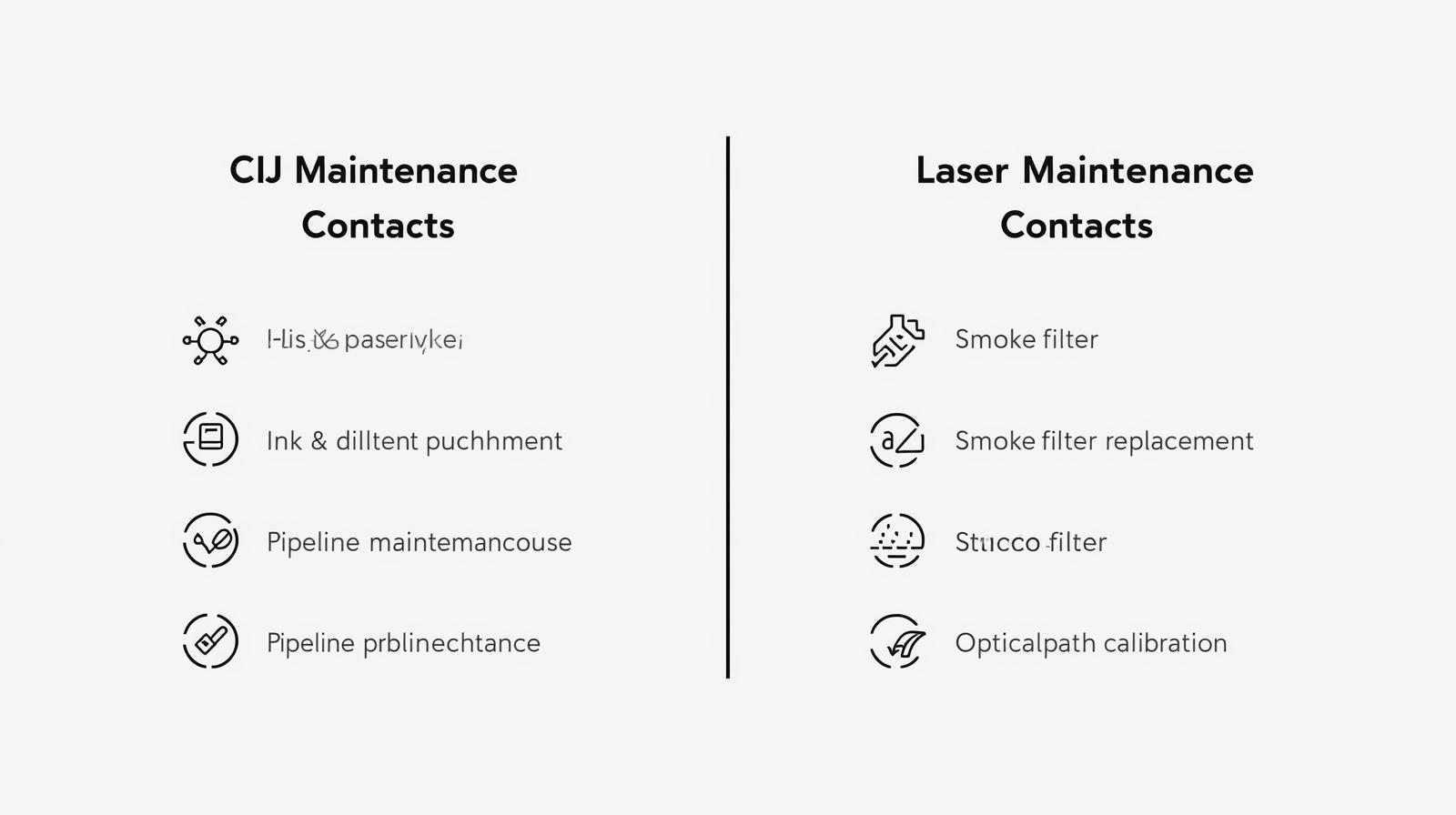
CIJ risks: nozzle clogs, satellites, ink compatibility surprises, and operator touchpoints for fluid handling. Vendors have mitigations, but the risks never go to zero because fluids are part of the physics.
Laser risks: alignment, enclosure safety, and extractor filter life. Fewer moving parts and no ink circuit generally mean fewer unplanned stops once dialed in.
Code Assurance tip: Whichever you choose, tie the printer to a database of approved messages. Most coding disasters are human, not hardware.
Here’s a conservative, transparent scenario. Adjust the few assumptions for your plant.
Assumptions
Codes per year: 80,000,000
Electricity: $0.12/kWh
Labor rate for interventions: $28/hr
Uptime target: >98%
CIJ (solvent inkjet)
Consumables (ink + makeup + filters): $0.0006 per code → 80,000,000 × 0.0006 = $48,000/yr
Service parts + routine maintenance: $1,500/yr
Operator time for fluids/cleaning: 10 min/shift × 2 shifts × 300 days = 6,000 min = 100 h → 100 × $28 = $2,800/yr
Energy: 60 W × 2,000 h = 120 kWh → 120 × $0.12 = $14/yr (≈$15)
CIJ annual run cost ≈ $48,000 + 1,500 + 2,800 + 15 = $52,315
Laser
No ink/makeup
Extraction + laser power: (350 W + 250 W) × 2,000 h = 1,200 kWh → 1,200 × $0.12 = $144/yr
Extractor filters: $600/yr
Preventive service: $800/yr
Operator time: ~4 h/yr for inspection/filters → 4 × $28 = $112/yr
Laser annual run cost ≈ $144 + 600 + 800 + 112 = $1,656
Capex (illustrative)
CIJ system: $18,000
Laser system: $50,000
Premium for laser: $32,000
Payback
Annual savings ≈ $52,315 − $1,656 = $50,659
Payback ≈ $32,000 ÷ $50,659 ≈ 0.63 years (~7.6 months)
If your CIJ consumables are cheaper (say $0.0004/code → $32,000/yr), payback is still ≈ $32,000 ÷ ($32,000 − $1,656) ≈ 1.05 years. Either way, consumables drive the math.
TCO(5 years) = Capex + Service/Labor + Energy + Consumables + Downtime Cost − Residual Value
Plug your own numbers in and let finance argue with the cells—not with you.
Very wet/cold or oily surfaces where laser can’t make contrast
Frequent substrate changes (day to day) that would force constant laser retuning
Portable/temporary coding where a small CIJ is easier than a laser enclosure
If you’re here, specify low‑VOC inks first and document the mitigations in your ESG/IH plans.
If you need to justify carbon in a review:
Boundary: cradle‑to‑grave for consumables (manufacture → transport → use → disposal) + site electricity.
Laser: mostly site electricity + filter media disposal.
CIJ: site electricity (small) + ink/makeup production and transport + packaging + disposal + cleaning consumables.
Sensitivity: code volume dominates; the more you print, the more laser’s consumable‑free model wins.
You don’t need fancy software to start: track cartridge count, makeup liters, changeover wipes by week; multiply by suppliers’ CO₂e factors; add kWh from the panel meter. Decision‑grade in a month.
Day 0–30: Baseline & risk map
Meter kWh on current coders.
Log every consumable and operator touch.
Build a substrate matrix (film, carton, glass, HDPE, etc.) and note wet/cold states.
Day 31–60: A/B trials
Pilot a laser on your friendliest SKU and a CIJ on your worst case.
Validate 2D readability with a verifier (grade target agreed with QA).
Test extraction layouts; measure noise and airflow for operators.
Day 61–90: Scale plan
Lock code templates in a central database (Code Assurance).
Write SOPs for extractor filters and safety interlocks.
Prepare your CIP (clean‑in‑place) or washdown plan (IP ratings matter).
Build the 5‑year TCO sheet and attach your baseline logs.
Substrates, line speeds, ambient temp/humidity, washdown level (IP rating)
1D/2D barcode specs + target verifier grades
Integration: PLC protocols (OPC UA/MQTT), recipe/ERP hooks
Enclosure and safety (for lasers): interlocks, light‑tight guarding, class signage
Extraction: airflow, filter type, replacement intervals, pressure monitoring
Service model: MTTR, spare kit, remote diagnostics, on‑site response
ESG: VOC reduction, consumable recycling, energy draw at duty cycle
Training: operator + maintenance curricula, code approval workflow
Fonts & x‑height: Tiny ‘1’ and ‘7’ fail in fast‑moving QA. Spec a minimum x‑height and test the font on your substrate.
Vision glare: 2D codes on glossy film need controlled lighting or patterned backgrounds.
Foaming vs ablation: On dark plastics, the wrong laser can produce pretty marks that don’t scan. Match wavelength to chemistry.
CIJ throw distance drift: Vibration moves nozzles. Add rigid mounts and encoders.
Data control: Most “wrong code” recalls start with manual message edits—lock them down.
If you print millions of codes on mainly laser‑friendly materials, laser marking is the quieter plant, the cleaner ESG slide, and—after year one—the cheaper ledger line. Solvent CIJ keeps its crown on messy surfaces and fast swaps. The adult answer is not brand loyalty; it’s a matrix: put lasers where the math loves them, and keep CIJ where physics demands it.
Maya’s plant did exactly that. The night shift is calmer. Luis still likes solving problems—he just solves better ones now.
Say the word and I’ll turn the math above into a one‑tab spreadsheet with sliders for ink price, kWh, duty cycle, wages, and capex. Or give me your real numbers and I’ll run it for you.
Contact: Jason
Phone: +8613337336942
E-mail: [email protected]
Add: Hangzhou City, Zhejiang Province, China