If you're still applying labels to your corrugated boxes, you're probably spending more than you need to—and creating bottlenecks in your production line. High-resolution piezo inkjet technology has matured to the point where it genuinely outperforms labels for most secondary case coding applications. Here's why manufacturers are making the switch.
Before we compare, let's clear up what piezo inkjet actually means. Unlike continuous inkjet (CIJ) systems that rely on charged droplets, piezo inkjet uses piezoelectric crystals that deform when voltage is applied. This deformation pushes ink droplets out of the printhead—no heat involved.
The result? Far more precise droplet control, which translates directly into sharper print quality and more predictable ink placement. Modern piezo systems can hit resolutions up to 1200 dpi, producing text, logos, and even photographs that look professional on brown corrugated surfaces.
Labels seem like a simple solution, but they come with real baggage:
Inventory overhead. You need to stock pre-printed labels, which means warehouse space, inventory management, and the risk of obsolescence when product information changes.
Application inconsistency. Labels can peel, bubble, or misalign—especially on uneven corrugated surfaces. A misapplied label means a rejected box, wasted label, and potential compliance issues.
Supply chain delays. If your label printer goes down or you run out of stock, your entire line stops. You're dependent on another vendor's lead times.
Cost per print that adds up. For high-volume operations, the per-label cost—even if small—compounds into significant annual spending.
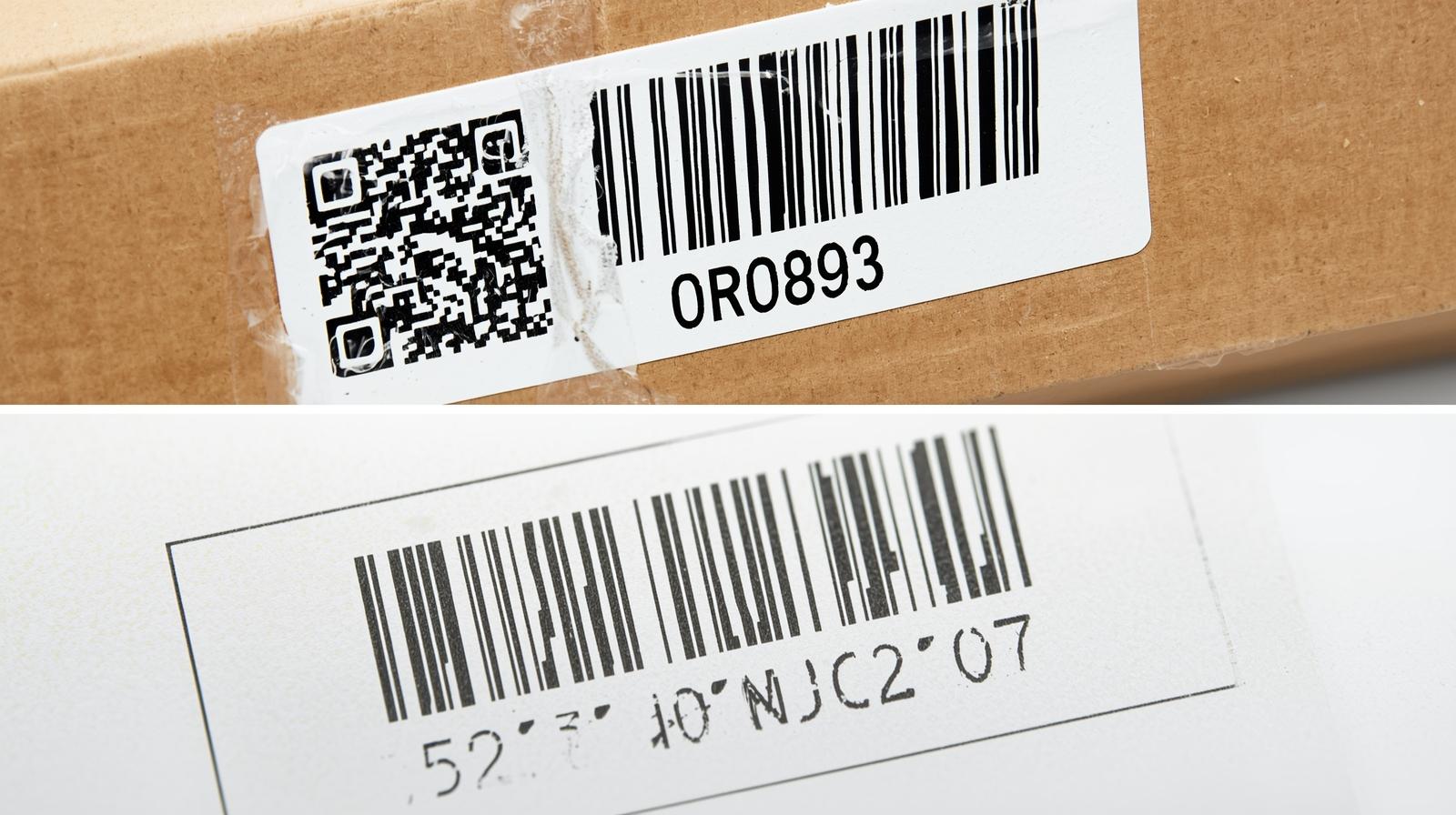
At 1200 dpi horizontal resolution, piezo inkjet produces crisp text down to 6-point font and razor-sharp GS1-compliant barcodes. The edge definition is clean enough for logos and product images that previously required pre-printed boxes. On porous corrugated stock, the ink soaks in properly, creating high-contrast marks that won't smudge in transit.
No label stock. No label applicator. No jam-prone mechanics. The printhead simply deposits ink where it needs to go—directly on the box. This eliminates an entire subsystem that can fail, misalign, or require maintenance.
When your production runs multiple SKUs or requires variable data (lot codes, expiration dates, country of origin), piezo inkjet handles it inline. Change the print content electronically in seconds—no re-labeling required. This is particularly valuable for co-packers and contract manufacturers who run frequent changeovers.
Modern piezo systems like the REA JET GK 2.0 or Markem-Imaje 5800 series are compact industrial printers that mount directly on production lines. Without the mechanicals of a label applicator, there's less to break and fewer consumables to stock.
While the upfront investment in a piezo inkjet system may be higher than a label printer, the math tilts quickly in its favor. No label stock to purchase, no applicator parts to replace, no downtime from label jams. For facilities printing millions of cases annually, the cost-per-print advantage is substantial.
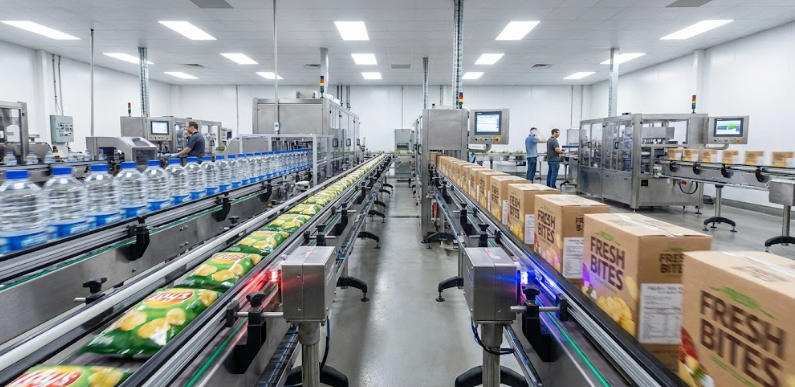
Piezo inkjet has become the go-to technology for secondary case coding—the information printed on the outside of shipping cases. This includes:
Best-by and expiration dates
Lot numbers and batch codes
GS1-128 barcodes for traceability
Country of origin
Company logos and branding
The reason it's taken over? Secondary coding is inherently variable (changes with every production run), high-volume, and needs to look professional without the cost of pre-printed boxes. Piezo inkjet solves all three.
Yes. Modern piezo systems are designed for absorbent surfaces including untreated corrugated. The key is matching the ink formulation to the substrate—pigment-based inks for porous surfaces adhesion better than dye-based alternatives.
Production-grade piezo systems run at speeds ranging from 30 to 150 meters per minute depending on resolution and print width. For most secondary case coding lines, 60-90 m/min is the practical sweet spot.
Corrugated manufacturing and cold storage logistics present moisture challenges. Water-resistant inks and proper curing systems (often UV or heat-assisted) address this. When specifying a system, ask about humidity and temperature operating ranges.
Reputable manufacturers design piezo systems to meet food-contact regulations. The inks used are typically low-odor and comply with EU and FDA requirements for indirect food contact. Always request the technical data sheet and declarations of conformity for your specific application.
If you're running more than a few thousand cases per shift and still using labels for secondary coding, a high-resolution piezo inkjet system deserves serious evaluation. The technology has crossed the threshold where print quality, reliability, and total cost of ownership all favor direct printing.
The transition isn't complicated either. Most reputable suppliers offer line audits, trials, and integration support. You'll need to evaluate your substrate (corrugated flute size and surface treatment), your data requirements (barcode standards, variable fields), and your throughput targets.
For facilities already running continuous inkjet, the step up to piezo is straightforward. The learning curve is minimal, and the quality improvement is immediate.
Labels served their purpose when print technology was limited and corrugated was just brown boxes heading to distribution centers. Today's retail and e-commerce supply chains demand more—better barcodes for scanning, better branding for unboxing experiences, and better economics for high-volume manufacturers.
High-resolution piezo inkjet delivers on all three. It's not a matter of if the industry shifts—it's a matter of when your operation makes the call.
Ready to see high-resolution piezo inkjet in action?
Compare your current labeling cost-per-print against a direct inkjet solution. Our team provides line audits, system trials, and integration support for corrugated packaging operations.
Email: [email protected]
Website: https://codingmachine.net
Request a Quote: https://codingmachine.net/contact.html
Contact: Jason
Phone: +8613337336942
E-mail: [email protected]
Add: Hangzhou City, Zhejiang Province, China