On manufacturing industry for thirty years, I’ve seen how technology changed the way we mark, code, and identify products. Early days used ink stamps, mechanical engraving—now we have complex laser marking systems. But nothing transformed my production quite like Laser marking technology.
In this guide, I’ll share my journey and expertise with laser marking systems, helping you understand why they’ve become modern manufacturing’s cornerstone.
On my career, I learned that laser marking systems are sophisticated tools using concentrated light beams to create permanent, high-contrast marks on various materials. This technology relies on three main lasers: fiber lasers, CO2 lasers, UV Lasers—each for specific applications and materials.
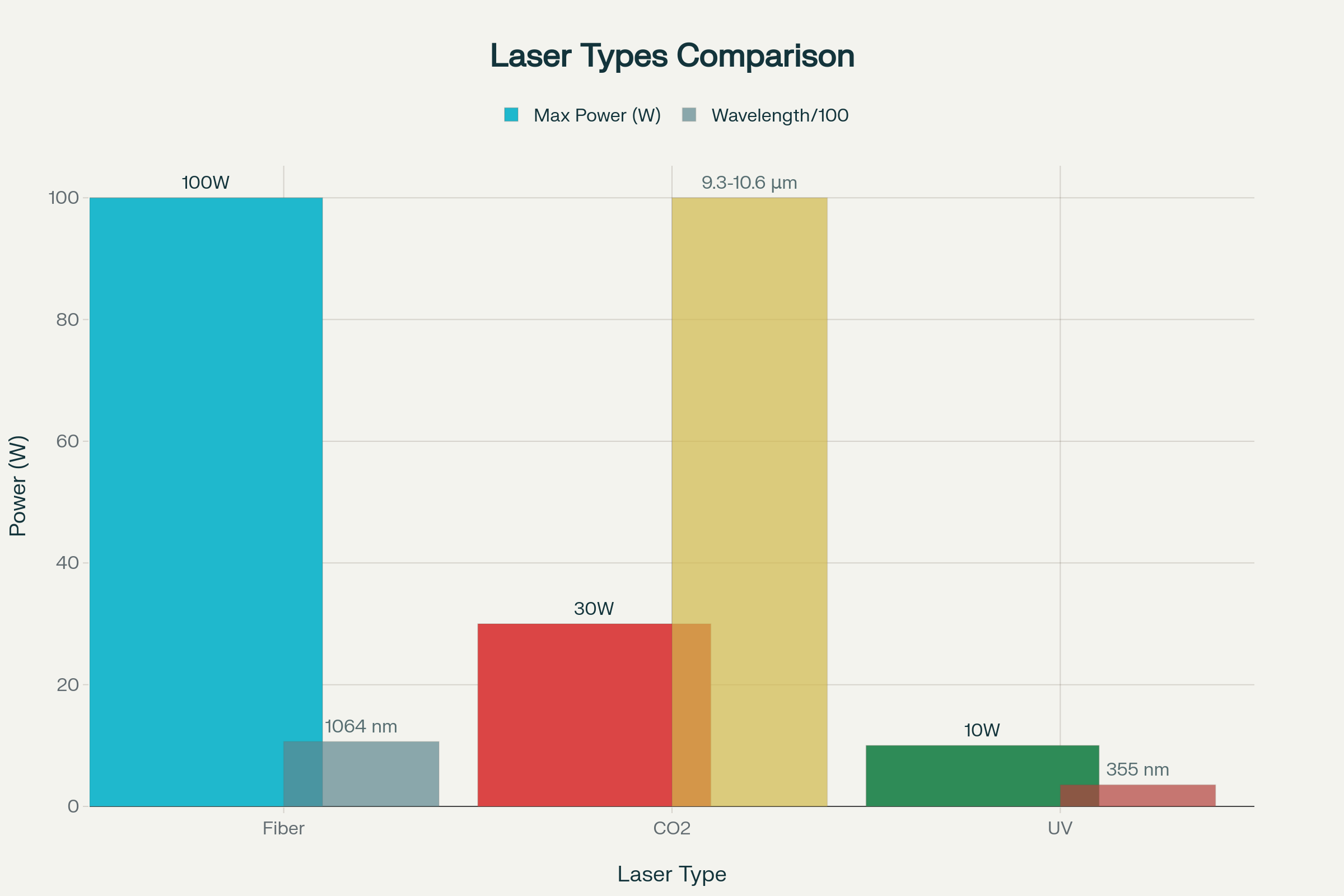
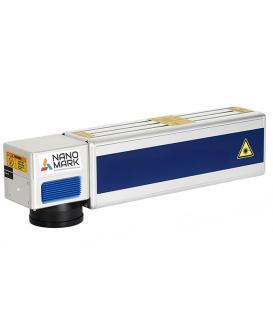
On my experience, fiber laser marking systems are industrial manufacturing’s workhorses. They operate at 1064 nm wavelength, excelling at marking metals, hard plastics, and ceramics. I found them perfect for serial numbers, barcodes, and logos on stainless steel—marking speed up to 20 m/s with exceptional precision.
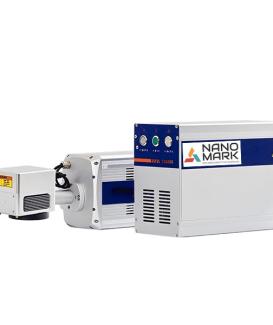
CO2 laser systems work at 9.3-10.6 μm wavelength, ideal for organic materials like wood, paper, and plastics. On my packaging operations, I use CO2 systems for high-speed date coding and branding—up to 30 characters per second.
UV Laser systems are precision leaders, operating at 355 nm wavelength. They do “cold marking”—high-contrast marks without much heat. This makes them perfect for heat-sensitive materials like medical devices, electronics, and delicate plastics.
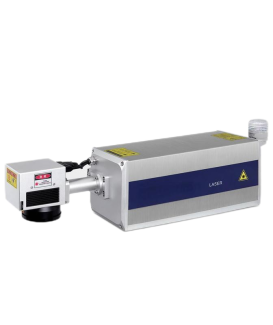
When I first implemented laser marking on my facility, the change wasn’t immediate. I started with an single fiber laser system for metal components, replacing old mechanical engraving. The difference was huge: mechanical engraving took minutes per part, laser marking took seconds.
The permanence of laser marks solved our durability issues right away. Unlike ink-based systems that fade or smear, laser marks stay crisp even after years of use and harsh conditions. This was crucial for meeting traceability requirements in aerospace and medical applications.

The precision of laser marking opened new doors. I could now create intricate QR codes, data matrix codes, and micro-text—impossible with traditional methods. This let me pack more information into smaller spaces, meeting demand for comprehensive product identification.
One big advantage is laser marking’s versatility across materials. My fiber laser systems excel on metals—from stainless steel surgical instruments to aluminum automotive parts. The annealing process creates deep, corrosion-resistant black marks.
For medical devices, UV Laser systems are game-changers. They mark silicone rubber, PTFE without compromising biocompatibility—perfect for FDA UDI requirements. The cold marking process keeps material integrity intact.
Modern laser marking’s precision amazes me. Spot sizes as small as 20-50 μm let me create marks impossible with old methods. This is vital in electronics, where space is tight and mark quality impacts functionality.
The non-contact nature of laser marking eliminates tool wear and mechanical stress. This is key for delicate parts where physical contact could cause damage.
On my electronics division, laser marking is essential for PCB identification and component traceability. Marking semiconductor packages requires precision only laser systems can provide. UV Lasers excel at marking flame-retardant materials in electronic housings—high contrast without thermal damage.
Integration with Industry 4.0 protocols streamlined my lines. Real-time data exchange between marking systems and MES enables full traceability.
The medical industry has strict rules for permanent, biocompatible marking that survives sterilization. My UV Laser systems deliver marks that stay legible after hundreds of 145°C autoclave cycles. Marking unique device identifiers (UDI) directly on components simplifies FDA compliance and improves patient safety.
On automotive manufacturing, laser marking provides permanent identification for part traceability and quality control. Marks must survive extreme temperatures, chemicals, and wear—my fiber laser systems consistently meet these demands.
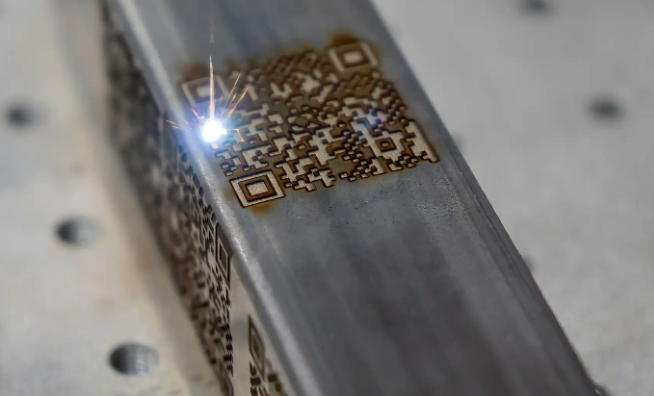
For aerospace, laser marking’s precision and durability are critical for regulatory standards. Every component must be traceable for decades—laser marks deliver that.
When I first evaluated laser marking systems, initial investment seemed high. But total cost of ownership analysis showed big long-term savings. Laser systems eliminate inks, solvents, and replacement tools. My fiber laser systems have MTBF over 100,000 hours—reducing maintenance costs dramatically.
Operational efficiency gains were equally impressive. Laser systems integrate seamlessly into lines, enabling continuous processing without manual intervention. Speed and consistency increased throughput while cutting labor costs.
Industry data shows laser marking costs $0.02 per mark vs. $0.07-$0.09 for ink-based systems. In high-volume production, these savings justify the investment fast.
Modern laser systems use vision-guided alignment to correct part positioning. This eliminated marking errors in my lines—first-pass yields above 99.5%. Integrated vision also does real-time quality checks, ensuring consistent results and minimizing waste.
Advanced systems use machine learning to optimize parameters for different materials. They adjust laser power, pulse frequency, and scan speed automatically. Predictive maintenance monitors performance and predicts replacements before failures—minimizing downtime.
Switching to laser marking’s most satisfying part was the environmental benefits. Eliminating inks, solvents reduced my facility’s impact. Laser systems generate no toxic waste and use less energy than traditional methods.
The precision of laser energy delivery reduces material waste—no rework from marking errors. This efficiency saves money and supports sustainability.
High-power laser systems need good thermal management. Continuous operation generates heat that can affect mark quality. I solved this with advanced cooling systems and proper laser cavity design. For minimal heat, UV Lasers’ cold marking process works perfectly.
Different materials need specific laser parameters for best results. I built a parameter database for various materials—enabling quick setup and consistent marks.
The laser marking industry is evolving fast. Artificial intelligence integration is making systems more autonomous. I’m excited about AI-supported parameter optimization—It automatically determines the best settings for new materials.
Miniaturization and integration trends make Ultraviolet Lasers more accessible. Chip-scale systems promise to bring precision marking to previously impractical applications.
Based on my experience, choosing the right laser system requires considering:
Material compatibility: Fiber for metals, CO2 for organics, UV for heat-sensitive materials.
Production volume: Determines laser power and configuration.
Integration requirements: Influences control interfaces and protocols.
Total cost of ownership: Includes initial investment, operating costs, maintenance—most accurate economic assessment.
Looking back on my 30-year journey, adopting laser marking systems was one of my most transformative decisions. Precision, efficiency, and reliability improved my products and opened new markets.
Laser systems have evolved from simple tools to complex systems enabling complete product traceability and quality control. As manufacturing demands more precision and automation, laser marking provides the foundation for success.
For manufacturers considering this technology, start with clear requirements and work with experienced suppliers. The investment pays off with better quality, efficiency, and customer satisfaction.
The future of manufacturing depends on technologies that deliver precision, efficiency, and sustainability. Laser marking systems embody all three—making them indispensable for modern manufacturers. My experience proves: this isn’t just an upgrade—it’s a transformation that positions you for success in a competitive global market.
Contact: Jason
Phone: +8613337336942
E-mail: [email protected]
Add: Hangzhou City, Zhejiang Province, China